
How to Use Your VR&E Benefits for Resume Writing and Career Services

You served. You got out. You have a service-connected disability rating. And now you're staring at a blank resume trying to figure out how to explain eight years of military experience to a civilian hiring manager who has never heard of an MOS.
Here's what a lot of veterans don't know: you might already have a benefit that pays for professional resume writing, interview coaching, and career services. It's called Veteran Readiness and Employment, or VR&E. Most people still know it as Chapter 31 or Voc Rehab. And it's one of the most underused career benefits the VA offers.
What VR&E Actually Is
VR&E is a VA program designed to help veterans with service-connected disabilities prepare for, find, and keep jobs. It covers a lot more than most people realize. Depending on which track you're placed in, VR&E can pay for college degrees, vocational training, job placement assistance, resume writing, interview preparation, career coaching, and even help starting a business.
The program runs on five tracks. The one most relevant to career services is the Rapid Access to Employment track, which is built for veterans who already have transferable skills and just need help with the job search itself. That includes professional resume writing, interview prep, and job placement support.
The other tracks cover reemployment with a former employer, self-employment for veterans who want to start a business, employment through long-term services for veterans who need education or training in a new field, and independent living for veterans whose disabilities are too severe for traditional employment.
Most veterans who come to us for resume help fall into either the Rapid Access to Employment track or the Employment Through Long-Term Services track. Both can cover the cost of working with a professional resume writer.
Who Qualifies
You're eligible to apply for VR&E if you weren't dishonorably discharged and you have a service-connected disability rating of at least 10% from the VA.
Applying isn't the same as being approved. After you apply, a Vocational Rehabilitation Counselor (VRC) holds an initial evaluation with you and decides whether you're entitled to VR&E benefits and services.
There used to be a 12-year time limit on eligibility, measured from your separation date or the date you received your first disability rating. That changed in 2013. If you were discharged on or after January 1, 2013, there's no time limit. If you were discharged before that date, the 12-year window still applies, but exceptions exist if you can demonstrate a serious employment handicap.
The benefit itself covers up to 48 months of services, though extensions are possible in certain situations.
How VR&E Pays for Resume Writing
This is the part that surprises most veterans. Your VR&E counselor, called a Vocational Rehabilitation Counselor or VRC, has the authority to approve career services as part of your employment plan. Those services can include professional resume writing, career coaching, interview preparation, and job search strategy.
The VA works with vendors listed on the National Employment Services Tracking system, or NEST. These are pre-approved providers that your VRC or Employment Coordinator can refer you to. ResumeYourWay is listed on NEST as a Service-Disabled Veteran-Owned Small Business, and we work with VR&E-referred veterans regularly. The details of our veteran resume help for VR&E referrals are on a dedicated page.
Here's how it typically works. You apply for VR&E through the VA (we'll cover the steps below). You get assigned a VRC. Together, you develop an Individualized Written Rehabilitation Plan, or IWRP, that outlines what services you need to reach your employment goal. If your plan includes professional resume writing or career coaching, your VRC refers you to an approved provider. The VA pays for the services. You pay nothing out of pocket.
The key thing to understand is that you don't pick a resume writer and submit a receipt. Your VRC has to include it in your plan, and the referral goes through the VA's system. That's why it matters to work with a provider that's already in the NEST system and understands how VR&E referrals work.
How to Apply
The application process is straightforward, though the VA being the VA, it takes some patience.
Start by going to VA.gov and submitting VA Form 28-1900. You can do this online. You'll need your service-connected disability rating on file before you apply. If you don't have one yet, that's the first step.
After you submit the form, you'll get a call or letter from a VRC to schedule an initial evaluation. During that meeting, the counselor assesses your employment barriers, your skills, and your goals. This is where you should be specific about what you need. If you know you need help with your resume, say so. If you're targeting federal jobs and need a federal resume, mention that. If you want interview coaching, bring it up.
Based on that evaluation, you and your VRC will develop your rehabilitation plan together. Once the plan is approved, services can begin.
The whole process from application to active plan can take anywhere from a few weeks to a few months, depending on your VA regional office and how quickly your evaluation gets scheduled. Don't let the timeline discourage you. The benefit is worth the wait.
Why This Matters for Your Resume
A military-to-civilian resume is not just a civilian resume with military job titles swapped out. The translation problem is real. Hiring managers don't know what a "Logistics Specialist E-5" did on a daily basis. They don't understand military rank structures, unit designations, or the scope of responsibility that comes with leading 30 people in a combat zone at age 24.
A good military-to-civilian resume translates all of that into language a civilian hiring manager can immediately understand and value. It quantifies your impact, maps your skills to civilian job requirements, and positions you as a competitive candidate, not someone who needs their experience "decoded."
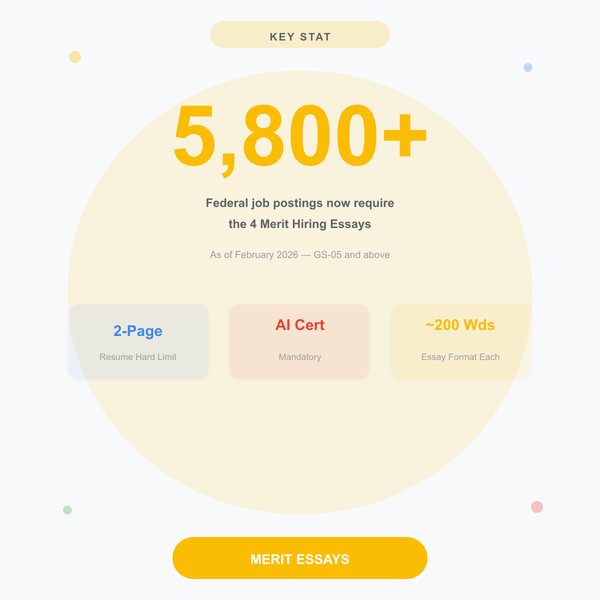
If you're targeting federal positions on top of that, the resume requirements are completely different. Federal resumes are capped at 2 pages under the OPM rule enforced since September 27, 2025, require specific formatting, and need to address every qualification listed in the job announcement. Getting that wrong means getting filtered out before anyone reads your application. Your VR&E benefit can cover federal resume writing too.
And once your resume is working, the interview is where you close the deal. VR&E can also cover interview preparation, which is especially valuable if you've been out of the civilian job market for years or have never interviewed outside the military. If your resume is already getting you interviews but you're not converting them to offers, that's a sign your interview skills need work, not your resume.
Common Mistakes Veterans Make with VR&E
A lot of veterans never apply at all. They assume VR&E is only for severely disabled veterans or only covers education. Neither is true.
Then there's the veterans who apply but stay too vague with their VRC about what they need. If you walk into your evaluation and say "I just need help finding a job," your plan might include generic job search workshops that don't move the needle. Be specific. Tell your counselor you want to work with a professional resume writer. Mention that you're targeting a specific career field or federal employment. The more specific your goals, the more targeted your plan will be.
And plenty of veterans don't know that providers like ResumeYourWay exist within the NEST system. Some get referred to generic career centers that offer cookie-cutter resume templates. If you want to work with a provider that specializes in military transitions across 85 industries and has helped more than 110,000 clients, ask your VRC about it. You have more choice in this process than most veterans realize.
The Bottom Line
VR&E is one of the best career benefits available to veterans with service-connected disabilities, and most people either don't know about it or don't realize it covers professional resume writing and career coaching. If you have a disability rating and you're struggling with your job search, this program exists for exactly your situation.
We work with VR&E-referred veterans every day. Our team of 28+ certified resume writers and career coaches understands military-to-civilian translation, federal resume requirements, and what it takes to get past applicant tracking systems.
If you're already in the VR&E program, ask your VRC about working with ResumeYourWay. If you haven't applied yet, start here or call us at 571-455-7775. We can walk you through the process and help you understand your options before you even talk to the VA.

Get the resume that gets you interviews.
110,000+ clients served since 2014. 100% human-written. Built for your exact situation.
No AI. No templates. Veteran-owned.