
AI vs Human Resume Writing: The Callback Gap Nobody Talks About (2026 Data)
A software engineer recently put his resume through one of the popular AI optimization tools. The verdict: a perfect 10 out of 10. Every keyword aligned. Every bullet formatted. Every section polished to a mirror shine.
Then he did something interesting. He fed the same resume back to the same AI, but this time asked it to evaluate the document as a demanding recruiter would. The result was devastating: vague impact statements, recycled phrasing, zero personality. The tool that built the resume couldn't survive its own scrutiny.
This isn't an edge case. It's the central paradox of AI-generated resumes: they're engineered to satisfy algorithms, not the people who actually make hiring decisions. And as applications have roughly doubled over the past two years while interview rates remain stubbornly flat, understanding the difference between machine-optimized and human-compelling has never mattered more.


The "Polished Sameness" Problem
Picture ten thousand applicants, all using essentially the same large language models, all tailoring their resumes to the same job posting, all pulling from identical training data about what constitutes "strong" resume language. The output converges. Rapidly.
One talent acquisition director described searching through a batch of 10,000 applications for a single opening and finding a particular phrase appearing in over 7,000 of them. You can probably guess it was something like "strategic thinker". Not because 7,000 people independently decided that phrase captured their professional identity, but because the statistical models powering their resume tools all landed on the same high-probability word combination.
This is the mechanical heart of the problem. AI selects language based on what statistically co-occurs with a given job title or industry. It doesn't draw from your actual Thursday afternoon solving a production crisis or the way you restructured a reporting process because you noticed something nobody else caught. It draws from patterns. And patterns, by definition, produce sameness.
The adjectives blur together. The sentence structures echo each other. Claims float without anchoring detail. A survey of hiring managers found that while the vast majority now encounter AI-assisted applications regularly, roughly three-quarters say that evaluating whether a candidate is genuinely qualified has become significantly harder. Not because the resumes are bad. Because they're all the same kind of good.
The Recruiter's Red Flag Lexicon
Recruiters who review hundreds of resumes per week have developed an informal vocabulary of AI tells. These aren't arbitrary style preferences. They're pattern-recognition shortcuts honed through exposure to thousands of machine-generated documents.
Certain words now function almost as confessions. "Delve" rarely appears in natural professional writing but shows up constantly in AI output. "Tapestry", as in "a rich tapestry of experience", reads as immediately synthetic. "Synergy" and "leverage" have been corporate cliches for decades, but their specific deployment patterns in AI text (frequency, placement, surrounding context) differ from how humans actually use them.
It's not that any single word disqualifies you. It's the clustering. When a recruiter sees three or four of these markers in a single page, the mental label shifts from "strong candidate" to "AI-written." And once that label attaches, every subsequent claim on the page loses credibility, even the genuine ones.
The irony is sharp: the tools designed to make your resume more competitive are increasingly the reason it gets flagged and deprioritized.
The "Burstiness Deficit"
Linguists use the term "burstiness" to describe the natural rhythm of human writing: the way we instinctively vary sentence length and complexity for emphasis. A short declarative punch. Then a longer, more nuanced sentence that unpacks the idea, adds context, maybe introduces a qualifier or counterpoint before arriving at its conclusion.
AI doesn't do this. Or rather, it does a shallow imitation of it. Most large language models produce sentences of remarkably uniform length and syntactic complexity. The rhythm is flat. Every bullet point lands with the same cadence, the same structural template, the same emotional register.
Recruiters feel this monotony even when they can't articulate what's wrong. They describe AI-written resumes as "smooth but lifeless" or "technically fine but forgettable." The information might be identical to a human-written version, but the delivery strips out the natural variation that makes writing feel like it came from an actual person with emphasis priorities and a point of view.
Consider the difference:
AI-flat: "Managed a team of 12 professionals to deliver quarterly objectives, resulting in a 15% improvement in operational efficiency and enhanced stakeholder satisfaction across multiple departments."
Human-rhythmic: "Inherited a team of 12 that had missed targets three quarters running. Rebuilt the workflow from intake to delivery. Efficiency jumped 15%, but the real win was getting procurement to actually return our calls."
Same facts. Completely different signal. The second version tells you something about the person, not just the outcome.
The Hallucination of Competence
Every AI model hallucinates. In the context of resume writing, hallucination takes specific, dangerous forms.
Metric inflation. You participated in a cross-functional project. The AI, sensing a gap between your description and the target role's requirements, quietly transforms "contributed to" into "spearheaded a cross-functional team of 8, driving a $2M revenue initiative." You may not even notice the edit. But background verification will.
Credential fabrication. Some AI tools, when they detect that a target job description lists preferred certifications you don't have, will weave those credentials into your profile text, not always as explicit claims, but through implication-rich language that suggests expertise you haven't earned. One career services professional reported a case where a client's AI-generated resume referenced a PMP certification the client had never pursued.
The "Kitchen Sink" phenomenon. Unable to make strategic judgments about what to emphasize and what to omit, AI tools tend to pack every conceivable keyword into the document. The result is a Senior Director-level resume that lists Microsoft Word proficiency alongside enterprise transformation experience. A human writer would recognize that one of those details actively undermines the other. The algorithm treats both as equally valid keyword matches.
These aren't occasional glitches. They're structural features of how generative models bridge the gap between what you've done and what a job posting asks for. The model doesn't know the difference between strategic emphasis and fabrication. It only knows proximity to the target text.


The Canva Trap and the "Wrapper Wars"
Visual resume builders like Canva produce genuinely beautiful documents. The layouts are clean. The typography is modern. The color palettes feel professional and current.
They're also frequently invisible to applicant tracking systems.
Canva's design power comes from complex layering: text boxes, graphic elements, columns, and decorative frames that render gorgeously as a PDF on your screen but collapse into garbled fragments when an ATS attempts to parse them. Text appears out of order. Sections merge. Bullet points vanish. Your carefully crafted executive summary arrives at the recruiter's screen as a jumbled block of disconnected phrases.
The AI resume tool market has its own structural problem: most of the dozens of tools available are "wrappers": thin interface layers built on top of the same underlying language models. They differentiate through branding, pricing tiers, and feature gating, but the core text generation runs through identical or near-identical AI pipelines. You're paying different companies for essentially the same output dressed in different templates.
Then there's subscription fatigue. Most AI resume tools lock their useful features, such as ATS optimization, multi-version generation and cover letter pairing, behind monthly plans ranging from $19 to $40. For a tool that produces the same statistically averaged output as its competitors, that ongoing cost adds up quickly, especially for job seekers who may be between positions.
The Callback Gap
Two structural differences work against AI-written resumes.
First, value front-loading. Human writers understand the 6-second scan: the brief window during which a recruiter decides whether to keep reading or move on. They concentrate the most compelling, differentiated content into the top third of page one. AI distributes keywords and achievements more evenly across the document, treating the bottom of page two with the same weight as the opening summary. That's algorithmically balanced but strategically backward.
Second, semantic sophistication. Modern applicant tracking systems have moved beyond simple keyword matching toward semantic search: they evaluate meaning, context, and relationships between concepts. A human writer who understands a hiring manager's actual priorities can signal competence through contextual framing, not just keyword density. AI tools still optimize primarily for keyword presence and frequency, which is increasingly the wrong game.
When AI Helps vs. When It Hurts
None of this means AI has no place in the job search process. It means the line between useful tool and harmful crutch needs to be drawn clearly.
The framework that works: AI-augmented research, human-authored narrative.
AI is genuinely useful for:
- Job description analysis: identifying the core competencies, required qualifications, and implicit priorities buried in a posting
- Industry language research: understanding how a specific field or company talks about the work you do
- Salary benchmarking and market data: gathering compensation ranges and demand signals for your role
- Brainstorming achievement framing: generating different angles for how to present an accomplishment (then rewriting in your own voice)
AI becomes dangerous when it crosses from research into authorship: when it writes your story instead of informing it. The moment the language on the page reflects statistical probability rather than lived experience, you've lost the signal that separates you from every other candidate running the same prompt.
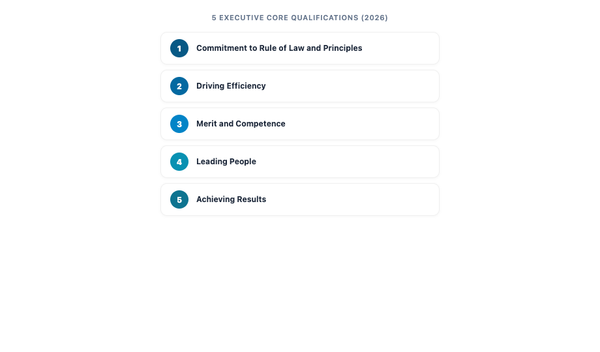
For federal applicants, this distinction carries additional weight. OPM's guidelines increasingly scrutinize AI-authored application materials. Submitting a resume you can't fully explain or defend in an interview isn't just a credibility risk. It's a compliance concern. The expectation is that your application represents your own assessment of your qualifications, not a model's interpretation of what qualifications you might have.
The Human Advantage
A skilled resume writer does something no AI can replicate: they listen. They ask about the project that went sideways and what you learned from it. They notice that you keep returning to a particular type of challenge, and they build a narrative around that pattern. They know that the gap on your resume from 2019-2020 doesn't need to be hidden. It needs to be contextualized with honesty.
They also know their audience. Not the algorithm. The person. The hiring manager who's reading her fortieth resume of the day and is looking for a reason to stop scrolling. The federal HR specialist who needs specific KSA language in specific locations. The recruiter at a startup who cares more about trajectory than titles.
Human writers bring judgment, empathy, and strategic intent: the ability to decide not just what to include, but what to leave out, what to emphasize, and what to frame differently than you would frame it yourself. That editorial intelligence is the product. Everything else is formatting.


Frequently Asked Questions
Is it OK to use ChatGPT or similar tools to write my resume?
Using AI as a research and brainstorming assistant is perfectly reasonable: analyzing job descriptions, exploring different ways to frame accomplishments, or understanding industry terminology. The risk begins when the AI writes the final document. The output will read like every other AI-generated resume in the pile, and recruiters are increasingly trained to spot the patterns. Use AI to inform your thinking, then write (or have a professional write) in an authentic human voice.
Can recruiters actually tell when a resume is AI-written?
Experienced recruiters who review hundreds of resumes weekly have developed strong pattern recognition for AI-generated text. The tells include uniform sentence structure, overuse of certain statistical-favorite words, vague achievement claims without specific context, and a general lack of personality or professional voice. Some organizations are also deploying AI detection tools as part of their screening workflow. Even if detection isn't certain in every case, the overall impression of inauthenticity can move your application to the bottom of the stack.
Is Canva a good option for building my resume?
Canva produces visually attractive documents, but its complex design layering frequently causes problems with applicant tracking systems. The text, columns, and graphic elements that look polished on screen can render as garbled, out-of-order fragments when an ATS attempts to parse the file. If you're applying to any company that uses an ATS (which is most mid-size and large employers), a Canva resume may never reach human eyes regardless of how strong the content is.
Why would a "perfect" resume be a red flag?
A resume that scores perfectly on AI optimization metrics is optimized for pattern matching, not for communicating who you are as a professional. Recruiters know that real career stories have nuance, context, and imperfection. When a resume reads like a flawless keyword-density exercise with no rough edges, personality, or specificity, it signals that a machine wrote it rather than a person who actually lived the experience. Authenticity, including the natural imperfections of human writing, is increasingly the differentiator.
When should I hire a professional resume writer instead of using AI tools?
Consider a professional writer when: you're targeting a specific industry or role level where generic language won't cut it; you're making a career transition and need your experience reframed for a new audience; you're applying to federal positions with strict formatting and compliance requirements; you've been submitting applications without getting callbacks; or your career story is complex (gaps, pivots, military transition) and needs strategic positioning. A certified writer brings not just writing skill but industry knowledge, hiring-side perspective, and strategic judgment about what to emphasize and what to leave out.
Get a Resume Written by Humans Who Understand Your Career
ResumeYourWay is 100% human-written. No AI generation, ever. 28+ certified resume writers, 55+ Subject Matter Experts, 110,000+ clients since 2014, and a 92% interview rate within 45 days. Service-Disabled Veteran-Owned.
View Resume Packages Schedule Free ConsultationRelated Resume Resources


Get the resume that gets you interviews.
110,000+ clients served since 2014. 100% human-written. Built for your exact situation.
No AI. No templates. Veteran-owned.